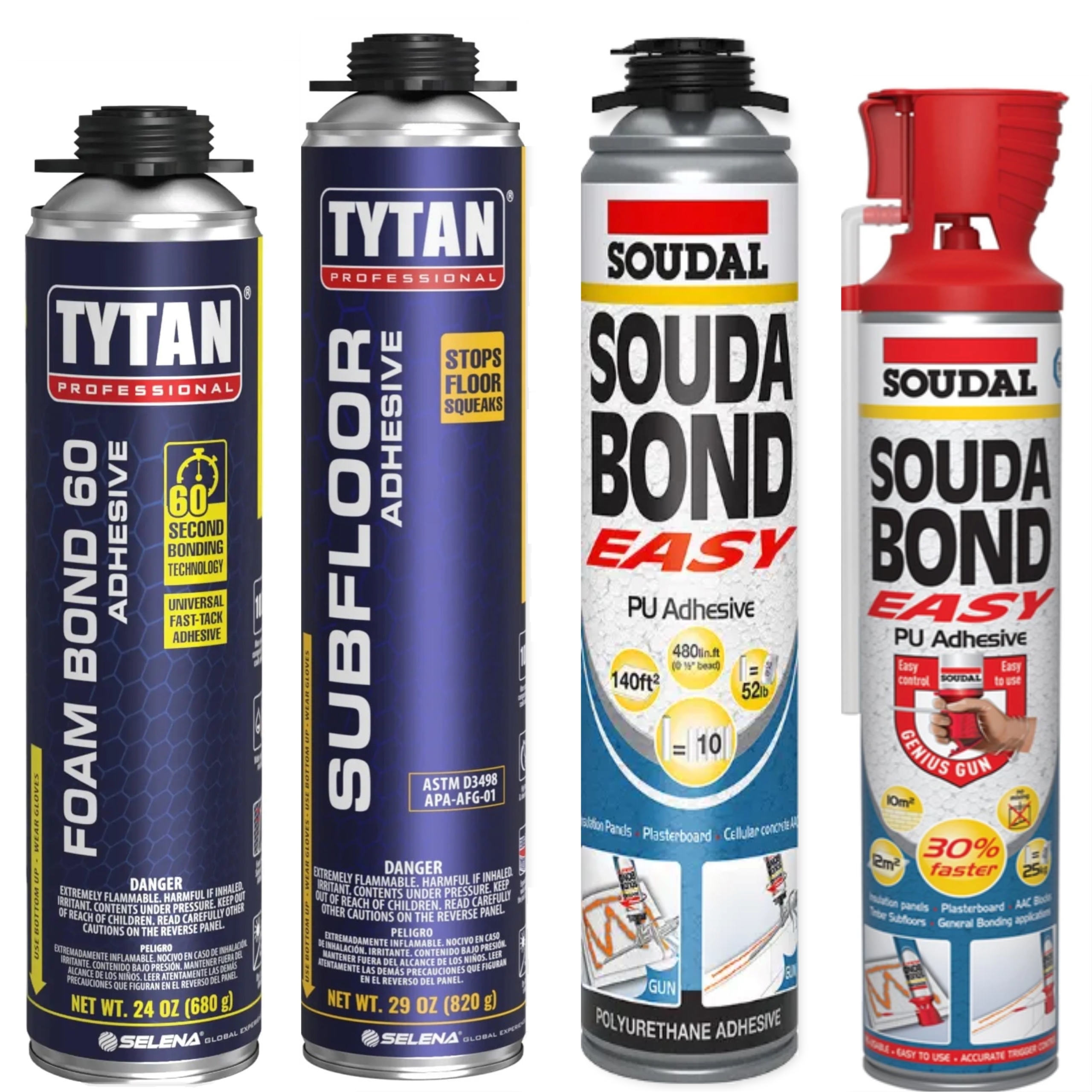
Aerosol Polyurethane Adhesives vs. Traditional Cartridge Adhesives: Understanding the Differences
Polyurethane adhesives have become an important part of modern construction, providing strong, durable bonds across a wide range of building materials. Traditionally, these adhesives have been supplied in cartridges and applied using a standard caulking gun. However, aerosol polyurethane adhesives have introduced another option, offering a different application method that can improve productivity and simplify certain construction tasks.
While both products are designed to bond building materials, they differ in application, coverage, handling, and ideal uses. Understanding these differences can help contractors choose the right adhesive for their particular project. Here at Rescom we carry a wide assortment of aerosol polyurethane adhesives for multiple jobs!
What Are Aerosol Polyurethane Adhesives?
Aerosol polyurethane adhesives are packaged in pressurized cans or dispensing systems and are designed to apply adhesive through a spray nozzle or specialized applicator. Rather than dispensing a continuous bead, many aerosol adhesives allow the user to distribute adhesive across a larger surface area in a controlled spray pattern.
This application method can be particularly beneficial when bonding insulation boards, foam panels, sheathing, and other materials that require adhesive across a broad surface.
Depending on the product formulation, aerosol polyurethane adhesives can offer fast initial grab, strong bonding characteristics, and excellent adhesion to a variety of common construction substrates.
What Are Traditional Cartridge Polyurethane Adhesives?
Traditional cartridge adhesives are supplied in tubes and applied using a manual or powered dispensing gun. They typically dispense a continuous bead of adhesive that can be applied in straight lines, dots, or specific patterns.
Cartridge polyurethane adhesives are commonly used for construction applications requiring controlled placement, gap filling, or bonding along specific joints and contact points.
Their ability to deliver adhesive precisely where it is needed makes them a dependable choice for many installation and assembly applications.
Key Differences Between Aerosol and Cartridge Adhesives
Although both products can provide strong polyurethane bonds, there are several important differences worth considering.
1. Application Speed and Labor Efficiency
One of the biggest advantages of aerosol polyurethane adhesives is application speed. Spray application can cover larger surface areas much faster than manually dispensing individual beads with a caulking gun.
For projects involving insulation boards, foam panels, or other large materials, this can help reduce installation time and improve overall labor efficiency.
Cartridge adhesives, on the other hand, generally require more time to apply across large surfaces, although they provide excellent control for smaller bonding applications.
2. Coverage and Adhesive Distribution
Aerosol adhesives are designed to distribute adhesive across a surface using a spray pattern. This can make it easier to achieve consistent coverage over larger areas, provided the manufacturer’s recommended spray pattern and application rate are followed.
Cartridge adhesives deliver a concentrated bead, making them better suited for applications where adhesive needs to be placed in specific locations.
The actual coverage of either product depends on the formulation, bead or spray thickness, substrate, and manufacturer’s application instructions.
3. Bonding Strength and Performance
Both aerosol and cartridge polyurethane adhesives can provide excellent bonding performance. However, it is important to understand that bonding strength is determined by the specific adhesive formulation rather than simply the packaging or dispensing method.
Some aerosol polyurethane adhesives are specifically formulated for bonding insulation and foam products, while cartridge adhesives may be designed for structural assembly, panel bonding, or other specialized construction applications.
Contractors should always verify substrate compatibility, required cure time, and performance specifications before selecting an adhesive.
4. Ease of Use and Equipment
Aerosol adhesives typically require minimal setup and can be applied using the supplied nozzle or a compatible dispensing gun. This can make them convenient for jobs where portability and quick application are important.
Cartridge adhesives require a dispensing gun, which may be manual or powered depending on the product and application. While this adds a piece of equipment, it also gives installers greater control over bead size and placement.
5. Material Waste and Jobsite Cleanup
Both application methods can help reduce waste when used correctly. Aerosol products can provide efficient surface coverage, but overspray and improper application can result in wasted material.
Cartridge products can offer more precise adhesive placement, although excess adhesive may need to be removed from the finished installation.
Proper storage, handling, and disposal instructions should always be followed for either product.
When Should You Use Aerosol Polyurethane Adhesives?
Aerosol polyurethane adhesives are particularly useful when a project involves bonding larger surface areas or repetitive installations.
Common applications may include:
- Bonding foam insulation boards.
- Attaching certain sheathing and panel products.
- Bonding compatible foam and construction materials.
- Insulation installation applications.
- Large-scale panel bonding where spray application is approved.
Their ability to distribute adhesive quickly can make them an excellent option for contractors looking to improve installation efficiency.
When Are Traditional Cartridge Adhesives the Better Choice?
Cartridge adhesives remain an excellent option when precise adhesive placement is important.
Common applications include:
- Applying adhesive along joints and seams.
- Bonding smaller components.
- Construction assembly requiring controlled bead placement.
- Applications requiring a thicker adhesive bead.
- Projects where a spray application would be impractical.
Cartridge products also offer a wide range of specialized formulations, making it easier to select an adhesive designed for a particular substrate or performance requirement.
Choosing the Right Polyurethane Adhesive
Ultimately, choosing between an aerosol polyurethane adhesive and a traditional cartridge adhesive comes down to the application.
If the job involves bonding larger surface areas and maximizing installation speed, an aerosol adhesive may offer significant advantages. If the project requires precise placement, controlled bead application, or a specialized bonding formulation, a traditional cartridge adhesive may be the better solution.
Neither application method is automatically superior. The best choice depends on the materials being bonded, jobsite conditions, required performance, and manufacturer’s recommendations.
Final Thoughts
Advances in polyurethane adhesive technology continue to give contractors more options for improving productivity and achieving reliable bonds. Aerosol polyurethane adhesives offer an efficient alternative to traditional cartridge products, particularly for larger surface applications, while cartridge adhesives remain a versatile and dependable solution for controlled bonding.
Understanding how these products differ allows contractors and building professionals to select the right adhesive for the job, helping improve installation efficiency without compromising bonding performance.
Rescom Products supplies building materials and construction solutions to professionals throughout the industry. Contact our team to learn more about available adhesive products and find the right solution for your next project.