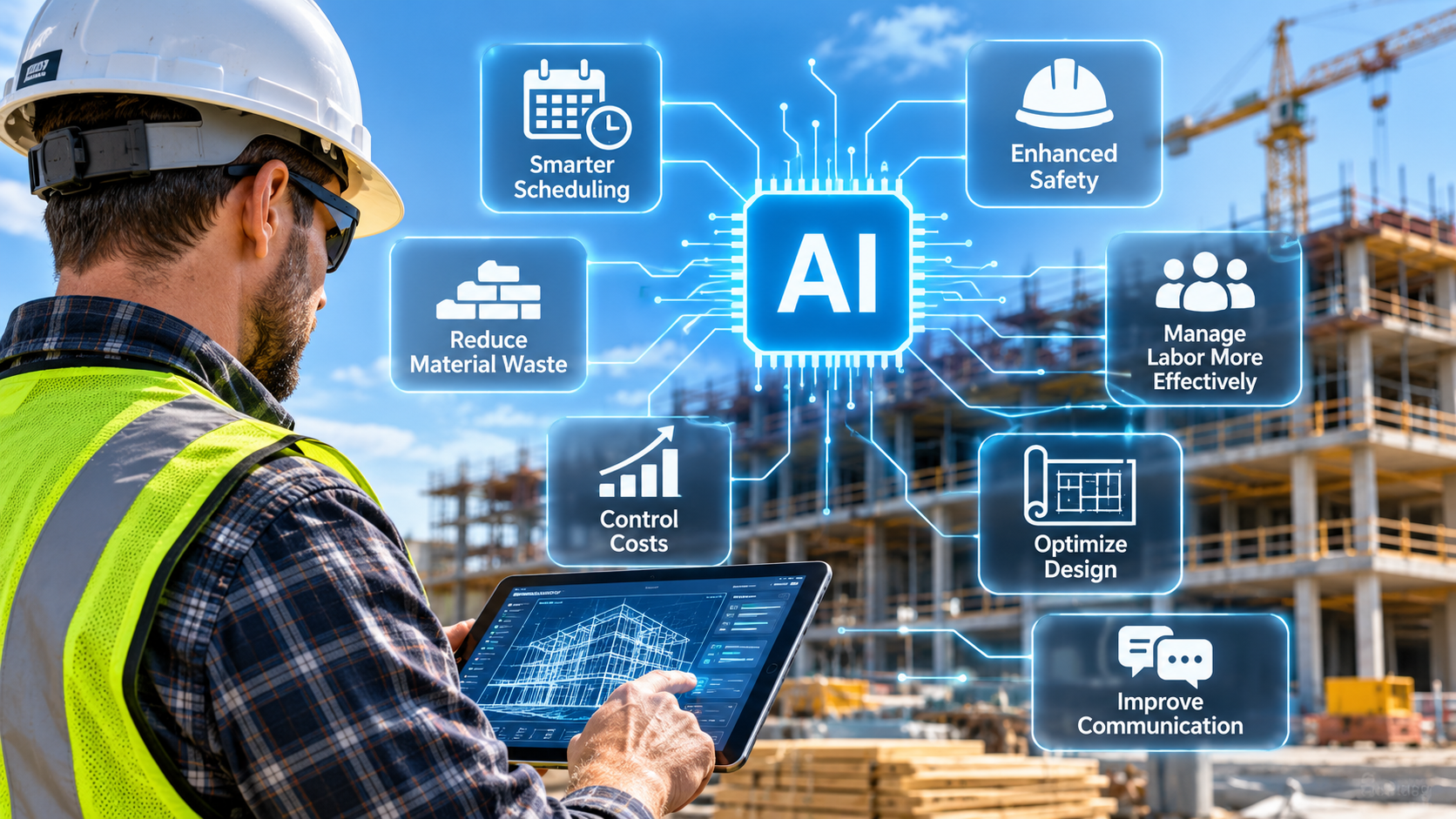
How AI Is Changing the Construction Industry: Smarter Building, Better Efficiency, and a More Productive Workforce
Artificial intelligence (AI) is quickly becoming one of the most talked-about technologies across industries, and construction is no exception. While construction has traditionally relied on hands-on experience, skilled labor, and proven building methods, AI is beginning to introduce new ways for contractors, builders, suppliers, and project managers to operate more efficiently, reduce costs, and improve the quality of their work.
AI isn’t designed to replace the skilled tradespeople who make the construction industry what it is today. Instead, it offers tools that can help professionals make better decisions, manage projects more efficiently, and spend less time on repetitive tasks.
Improving Project Planning and Scheduling
One of the biggest challenges in construction is keeping projects on schedule. Delays caused by weather, labor shortages, material availability, or unexpected site conditions can quickly affect budgets and deadlines.
AI-powered software can analyze project schedules, labor requirements, weather forecasts, material deliveries, and historical project data to identify potential problems before they become major setbacks. This gives contractors and project managers an opportunity to adjust schedules, allocate resources, and plan ahead.
By identifying potential delays earlier, construction companies can make more informed decisions and reduce the likelihood of costly disruptions.
Reducing Material Waste and Improving Cost Control
Material waste is a major concern throughout the construction industry. Ordering too much material, incorrect measurements, damaged products, and inefficient planning can all contribute to unnecessary expenses.
AI can help contractors better estimate the materials needed for a project by analyzing building plans, project specifications, previous jobs, and other relevant information. These tools can help improve material estimates, identify purchasing opportunities, and reduce unnecessary waste.
For contractors and builders, better material planning can translate into fewer trips to suppliers, fewer leftover materials, and better control over overall project costs.
Enhancing Jobsite Safety
Safety remains one of the most important priorities in the construction trade. AI technology is increasingly being used to help identify potential hazards and improve jobsite safety practices.
Some AI systems can analyze camera footage to identify unsafe conditions, recognize when workers may not be wearing appropriate protective equipment, or detect potential hazards involving machinery and equipment. Other technologies can help evaluate jobsite risks based on environmental conditions, project activities, and historical safety information.
While AI cannot replace proper training, safety procedures, or experienced supervision, it can provide another layer of support in helping construction companies identify and address potential risks.
Helping Contractors Manage Labor Shortages
Finding and retaining skilled workers continues to be a challenge for many construction businesses. AI can help companies make better use of the workforce they already have by improving scheduling, reducing administrative workloads, and helping organize job assignments.
AI tools can also assist with documentation, communication, project updates, estimating, and reporting. Tasks that once required hours of paperwork may be completed much faster, allowing employees to focus more of their time on the jobsite, customer service, and other essential responsibilities.
For smaller construction companies, these tools may be particularly valuable because they can help accomplish more without necessarily requiring additional office staff.
AI and Construction Design
AI is also changing the way construction projects are designed and evaluated. Building designers, architects, engineers, and contractors can use AI-assisted tools to review plans, explore design alternatives, identify potential conflicts, and evaluate different construction approaches.
Building Information Modeling (BIM) and AI technologies can work together to help identify clashes between building components, such as plumbing, electrical systems, structural elements, and mechanical equipment, before construction begins.
Identifying these issues during the planning stage can help prevent expensive modifications once work is underway.
Improving Communication and Customer Service
Communication between contractors, suppliers, customers, subcontractors, and project managers is critical to keeping construction projects moving.
AI tools can assist with writing project updates, organizing meeting notes, responding to routine customer inquiries, preparing estimates, and summarizing project documentation. Some businesses are also using AI-powered assistants to help answer questions, organize information, and provide quicker responses to customers.
For construction businesses that handle multiple projects at once, improved communication and organization can make a significant difference in day-to-day operations.
AI Is Also Changing the Construction Supply Chain
AI isn’t limited to the jobsite. Building material distributors, wholesalers, manufacturers, and suppliers are also beginning to use AI to improve inventory management, forecasting, purchasing, customer service, and logistics.
AI can help businesses analyze purchasing trends, identify products that may need replenishment, forecast demand, and evaluate