
Polyurethane adhesives are often considered superior to traditional caulk-style adhesives (like basic acrylic or silicone caulks) because they’re engineered to bond structurally, not just seal gaps. Here’s how they compare:
1. Stronger Bonding Power
Polyurethane adhesives chemically cure and form very strong, durable bonds to materials like:
-
Wood
-
Concrete
-
Metal
-
Masonry
-
Some plastics
Traditional caulks (especially acrylic latex) are mainly designed for sealing gaps, not holding materials together under load.
Result: Polyurethane can replace nails or screws in some applications. Caulk cannot.
2. Better Flexibility + Durability
Polyurethane adhesives:
-
Stay flexible after curing
-
Absorb vibration and movement
-
Resist cracking and shrinking
Basic caulks can shrink, dry out, or crack over time—especially with temperature swings.
Result: Better for outdoor use and structural joints.
3. Superior Weather & Moisture Resistance
Polyurethane:
-
Resists water immersion
-
Performs well in freeze–thaw cycles
-
Handles UV exposure better than many acrylic caulks
Silicone caulk is good for moisture, but it doesn’t provide structural bonding strength like polyurethane.
4. Gap-Filling Capability
Polyurethane expands slightly as it cures (depending on formulation), helping it:
-
Fill irregular surfaces
-
Bond uneven materials
-
Maintain contact across rough substrates
Most traditional caulks don’t expand and may lose contact over time.
5. Paintability & Surface Compatibility
Many polyurethane adhesives:
-
Can be painted
-
Adhere to more surface types
-
Sand down once cured
Silicone caulk, for example, usually cannot be painted.
When Traditional Caulk Is Still Better
Polyurethane isn’t always the best choice. Traditional caulk is better for:
-
Small cosmetic gaps
-
Interior trim
-
Quick, easy cleanup (latex caulk cleans with water)
-
Lower cost projects
Polyurethane is stronger—but messier, more expensive, and harder to remove.
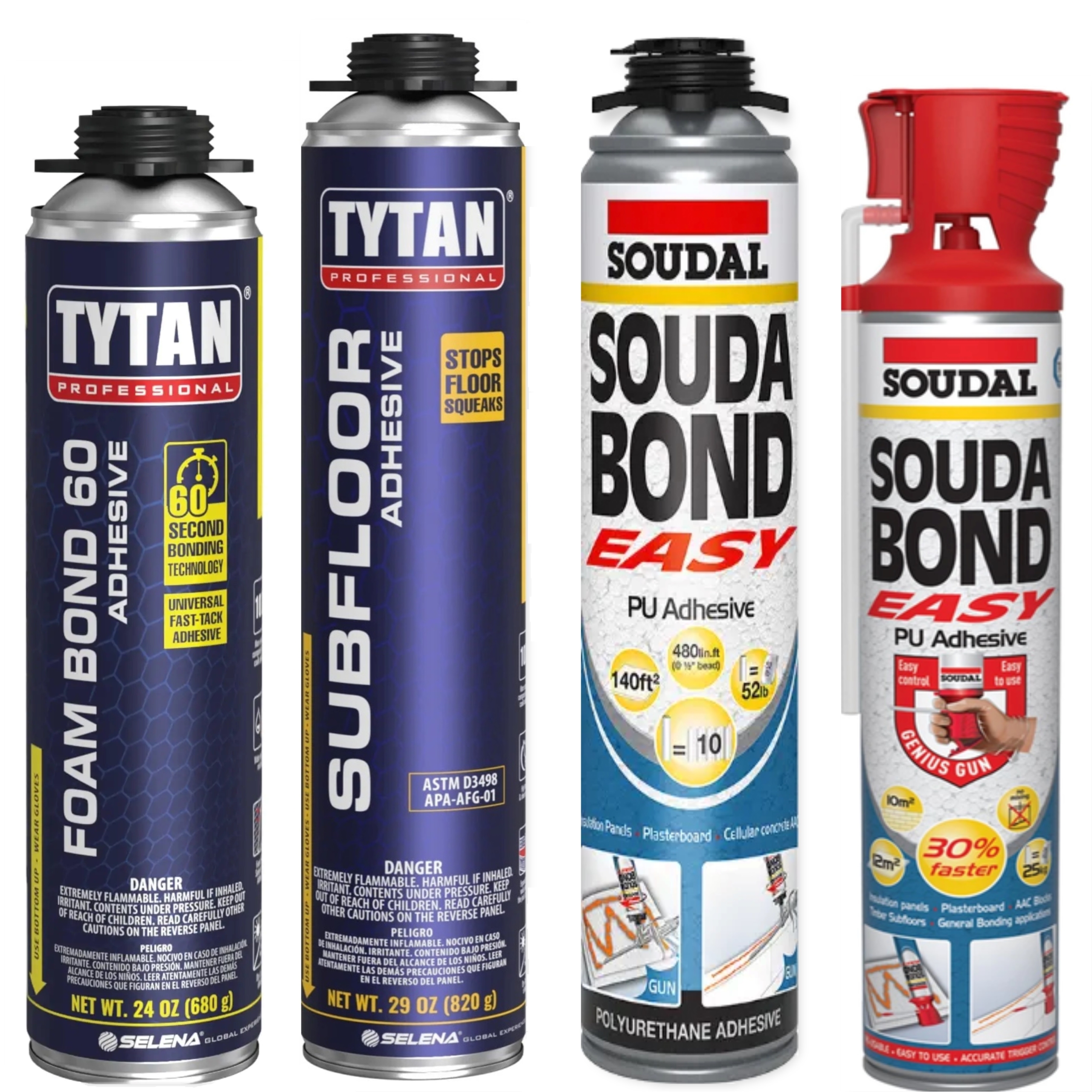
Foam Polyurethane Adhesives for drywall – subfloor – foam shapes etc.